

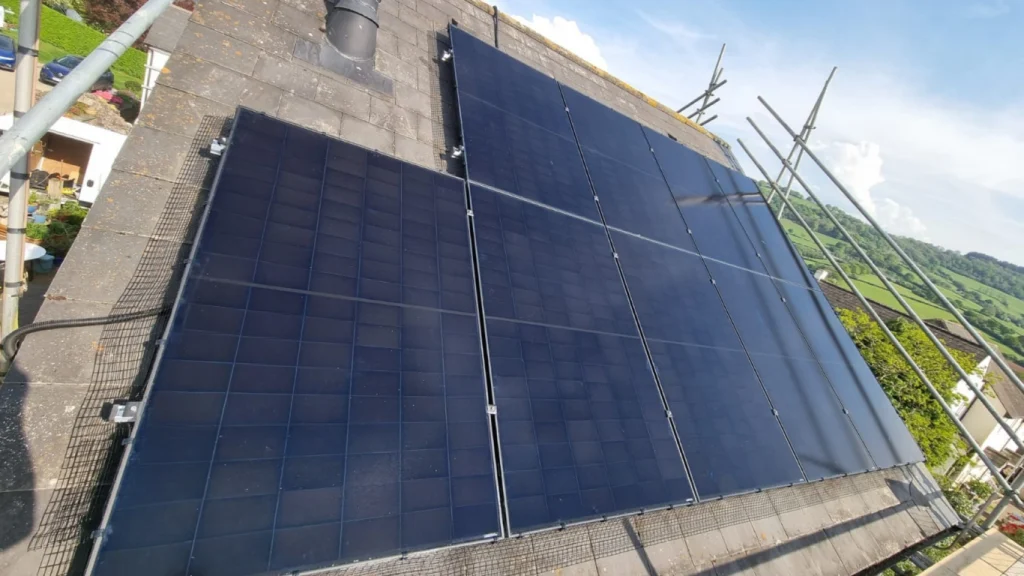
It is the first question almost everyone asks us, and it is the right one to ask. The honest answer is that there is no single figure that applies to every home — but that does not mean it is guesswork. Your savings can be estimated properly, and this is how we do it.
Why there is no one-size-fits-all number
Two houses on the same street can produce very different results from the same solar system. The direction the roof faces, its angle, a neighbour’s tree, a chimney casting a shadow at four o’clock — all of it changes the maths. Anyone who quotes you a savings figure before looking at your property is telling you what you want to hear, not what is true.
At LJM Solutions we would rather give you a number you can rely on. That takes a survey and some proper modelling.
What we actually measure
We use advanced software to estimate your savings. It takes account of:
- Panel and inverter performance — the real output figures for the specific equipment we would install, not an industry average
- Shading — from trees, chimneys, dormers and neighbouring buildings, across the day and across the seasons
- Roof pitch — the angle of your roof affects how much light the panels capture
- Orientation — which way your roof faces, and how much of it is usable
- Local weather data — actual conditions for your area rather than a national figure
From that we calculate your expected energy generation and your potential savings, including anything you earn from exporting surplus electricity back to the grid.
Your roof, modelled in 3D
Before we recommend anything, we build a three-dimensional model of your property to work out which panels fit your roof best. The software database holds over 400 panel manufacturers, and every panel listed carries its own performance data.
That matters because the best system for your roof is rarely the biggest one. It is the one that fits the usable space properly and performs well in the conditions your property actually has.
Generating power is only half of it
How much you save depends heavily on what happens to the electricity once your panels produce it. There are three possibilities:
- You use it as it is generated. This is where the biggest savings sit, because every unit you use is a unit you are not buying from your supplier.
- You store it. Adding battery storage lets you keep excess energy for later, which pushes far more of your generation into the “used at home” column.
- You export it. Any surplus can be sold back to the grid through a Smart Export Guarantee (SEG) tariff. We can help set your SEG tariff up so you get the most from your investment.
How battery storage changes the maths
Solar panels generate most during the middle of the day. Most households use most of their electricity in the morning and the evening. Without storage, a good portion of what you generate gets exported at a lower rate than you pay to buy it back later.
A battery closes that gap. It stores the daytime surplus so you can use your own energy after dark, which improves the efficiency of the whole system.
You do not have to decide immediately. You can add batteries at any time to store excess electricity created by your panels, and doing so will boost the efficiency of your existing solar PV system. If you already have panels fitted, storage can be retrofitted into your existing setup.
What about winter and cloudy days?
A common worry, and a reasonable one in the UK. Solar panels do not stop working when the sun goes behind a cloud.
Technology has improved considerably, and we use only tier 1 solar panels to ensure maximum efficiency across varying weather conditions. On cloudy, rainy or snowy days your panels keep generating power — simply at a reduced rate. Your annual figures already account for this, because the modelling uses real local weather data rather than assuming perpetual sunshine.
Savings are a long game
Solar is not a one-year calculation. Our panels are built to last 25 or more years with minimal upkeep, which means the savings keep accruing long after the system has paid for itself. Every year that electricity prices rise, the value of generating your own goes up with them.
It is also worth remembering that solar panel waste cannot be sent to landfill in the UK — it must be recycled to comply with regulations. The majority of the materials in a panel, including aluminium, glass and silicone, can be recovered.
Getting your actual number
Everything above produces an estimate specific to your property, not a brochure figure. It starts with a free site survey, where we assess your property and design a solution around your roof, your usage and your goals.
There is no pressure sales element to this. We are a family-run team based in Long Eaton, and everything from survey to handover is managed in-house by our own MCS-certified engineers.
If you would like your own figures, get in touch for a free site survey. You can also read more about domestic solar panel installation, or browse our frequently asked questions.
We install across the East Midlands and nationwide, including Nottingham, Derby, Leicester and Long Eaton.